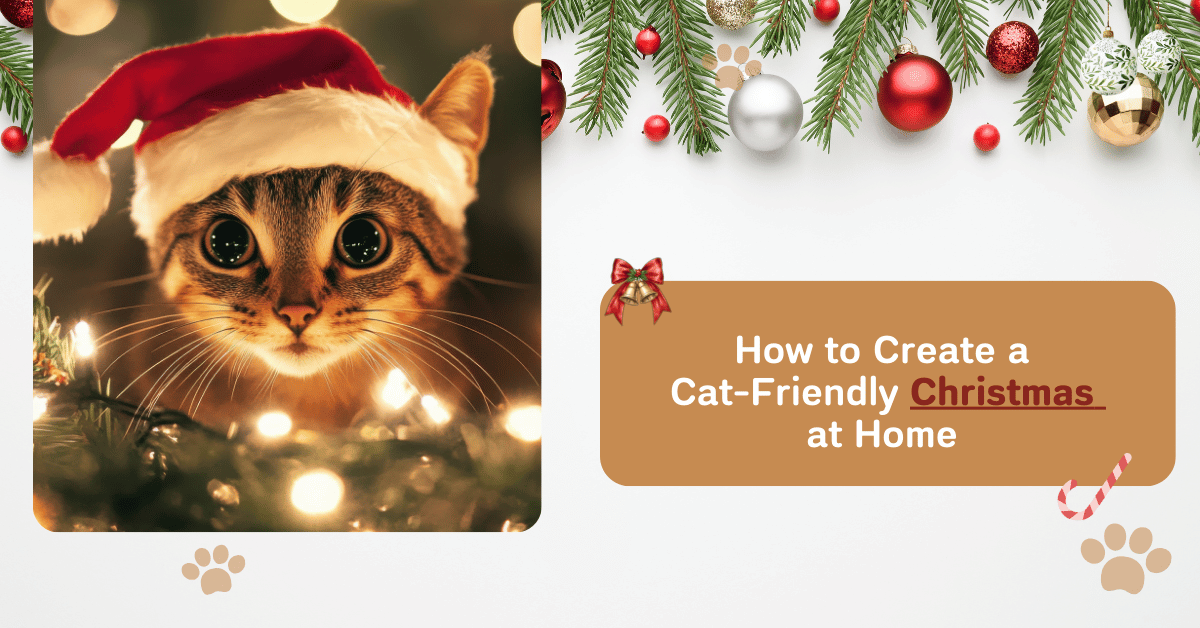
Christmas brings colour, noise, smells, and movement into every corner of the house. For people, it feels festive. For cats, it often feels confusing and overwhelming.
Cats don’t understand celebrations. They understand routine, familiarity, and safe spaces. When those disappear overnight, stress quietly creeps in. This is why so many cats seem withdrawn, restless, or “not themselves” during the festive season.
This guide isn’t about removing the fun from Christmas. It’s about keeping your cat comfortable, calm, and safe while everything else changes around them.
Why Christmas Disrupts Cats More Than We Expect
Christmas disrupts cats more than expected because it changes many things in their world at the same time: space, sounds, smells, people, and routine. Cats rely on predictability, so this “all‑at‑once” change feels unsafe and stressful.
Common triggers include:
- Sudden household noise and guests
- New decorations hanging at eye level
- Strong food smells and leftovers
- Disrupted routines
- Less one-to-one time
Most cats won’t show stress loudly. Instead, they hide, eat less, overgroom, or become unusually clingy. These signs are easy to miss when everything feels busy.
Festive Decorations: Fun for Us, Risky for Cats
Many Christmas decorations are designed to catch attention – Which is exactly why cats find them irresistible.
1. Christmas Trees and Curious Cats
Trees become climbing challenges, scratching posts, and batting targets. The danger isn’t just the tree falling over it’s what’s on it.
Loose needles, small ornaments, hooks, and water at the base can all cause problems if chewed or swallowed. Artificial trees may look safer, but they can shed plastic pieces that end up in curious mouths.
If you have a tree:
- Secure it properly
- Keep fragile items higher up
- Cover the base so water isn’t accessible
2. The Hidden Risk of Tinsel and Ribbons
Anything long, shiny, or string-like can be swallowed. Once inside, it doesn’t pass easily and can cause serious internal damage.
This includes:
- Tinsel
- Ribbon
- Gift wrap string
- Hanging decorations
If you wouldn’t want a toddler chewing it, it’s best kept away from a cat.
Christmas Food Smells Incredible That’s the Problem
Festive food is rich, seasoned, and tempting. Even cats who normally ignore human food can’t resist the smell of roasted meat and gravy.
Many common holiday foods are unsafe for cats:
- Fatty leftovers
- Sauces and gravies
- Cooked bones
- Chocolate and sweet treats
- Foods containing onions, garlic, or raisins
Even small amounts can cause stomach upset, and richer foods can lead to longer-term digestive issues.
If you want to include your cat in the celebration, keep it simple:
- Plain cooked meat
- No seasoning
- Small portions
And clear plates quickly cats are excellent at finding unattended food.
Guests, Noise and the Pressure to “Be Friendly”
Cats don’t enjoy being the centre of attention. During Christmas, they’re often approached more than usual by visitors who want to stroke or pick them up.
This can lead to:
- Hiding for long periods
- Increased anxiety
- Avoidance of food or litter trays
The best thing you can do is let your cat choose. Provide a quiet room where they can retreat, with everything they need nearby. Ask guests to let your cat approach them — not the other way around.
A cat that feels in control will settle much faster.
Warm Houses, Cold Corners and Winter Comfort
During winter, cats naturally seek warmth. They’ll sleep near radiators, under blankets, or in unexpected places.
A few things to watch:
- Water bowls placed too close to heat sources
- Cats squeezing into unsafe hiding spots
- Reduced water intake
Soft bedding, fresh water in multiple spots, and checking enclosed spaces before closing doors can prevent accidents.
Travel Plans and Why Cats Prefer Staying Home
Cats form strong attachments to places, not suitcases. For many, travelling is far more stressful than staying put.
Busy roads, carriers, unfamiliar environments all of it can be overwhelming. This is why many owners choose in-home care during the festive period.
Staying at home allows cats to:
- Keep their routine
- Avoid exposure to unfamiliar animals
- Feel secure in familiar surroundings
A calm environment makes all the difference.
Simple Ways to Protect Your Cat This Christmas
You don’t need to change everything just be mindful.
- Secure decorations
- Keep food out of reach
- Maintain feeding routines
- Offer quiet, private spaces
- Arrange reliable care if you’re away
Cats don’t need excitement. They need predictability and safety.
A Peaceful Christmas Is the Best Gift of All
Your cat won’t remember the decorations or the presents. They’ll remember whether they felt safe, calm, and understood. At Chatty Cats Care, we see every day how much comfort familiar routines bring to cats especially during busy seasons. With the right care and a little planning, Christmas can be enjoyable for everyone in the house, including the quiet ones watching from the corner.Because a relaxed cat makes the holidays better for everyone
FAQ’s
Why does my cat behave differently at Christmas?
Christmas brings sudden changes to your cat’s environment new decorations, different smells, extra noise, and changes to routine. Cats rely on familiarity, so these disruptions can cause stress, leading to behaviour changes like hiding, reduced appetite, or restlessness.
Is it normal for cats to hide more during the festive season?
Yes. Hiding is one of the most common ways cats cope with stress. Busy households and unfamiliar visitors can feel overwhelming, so cats often retreat to quiet spaces where they feel safe.
Can Christmas decorations be dangerous for cats?
Some can be. Items like tinsel, ribbons, hanging ornaments, and loose wires can be swallowed or chewed. It’s best to secure decorations properly and keep tempting items out of your cat’s reach.
Why is my cat suddenly interested in human food?
Festive food smells are stronger and more frequent than usual. Even cats that normally ignore human meals may be drawn to rich aromas. Sticking to your cat’s usual diet and clearing plates quickly helps prevent problems.
Should I let my cat interact with guests?
Only if your cat chooses to. Cats feel more comfortable when they control interactions. Providing a quiet space away from guests allows them to relax and approach people on their own terms.
How can I reduce my cat’s stress during Christmas?
Keeping feeding times consistent, maintaining familiar routines, offering quiet retreat areas, and limiting sudden changes can all help your cat feel more settled during the festive period.
Is it better for cats to stay at home when I travel during Christmas?
For most cats, staying in their familiar environment is less stressful than travelling. In-home care helps maintain routine and reduces anxiety while you’re away.